Rotator cuff tears are a common and often painful shoulder injury, affecting millions worldwide. These tears can result from acute trauma or degenerative changes over time, leading to pain, weakness, and limited range of motion. While traditional treatments range from physical therapy and medication to surgical repair, advancements in regenerative medicine offer promising new avenues. Among these, platelet-rich plasma (PRP) therapy has emerged, harnessing the body’s natural healing capabilities with the goal of promoting healing and alleviating symptoms. In this post, we’ll take a closer look at PRP therapy for rotator cuff tears, including how it works, its potential benefits, the treatment process, and who might be an ideal candidate.
Key Takeaways
- PRP is derived from your own blood, concentrated with platelets rich in growth factors, and injected into the injured rotator cuff.
- The procedure is straightforward, involving a blood draw, centrifugation to isolate PRP, and injection into the affected area.
- Post-injection care emphasizes initial rest followed by a structured rehabilitation program to support the healing process.
- Not all rotator cuff tears or patients are suitable for PRP. A thorough evaluation by a specialist is often necessary to determine candidacy.
Understanding Rotator Cuff Tears
The rotator cuff is a group of four muscles and their tendons that surround the shoulder joint, providing stability and enabling a wide range of arm movements. Tears in these tendons can occur due to sudden injury, such as a fall or lifting a heavy object, or gradually over time due to repetitive stress, age-related degeneration, or impingement.
Symptoms typically include pain at rest and with movement, weakness when lifting or rotating the arm, and difficulty sleeping on the affected side. The severity of a rotator cuff tear can range from a partial-thickness tear, where the tendon is damaged but not completely severed, to a full-thickness tear, where the tendon is completely separated from the bone.
Management strategies for rotator cuff tears often begin with conservative approaches like rest, ice, anti-inflammatory medications, and physical therapy. If these methods fail to provide adequate relief, surgical intervention may be considered. For many patients, regenerative therapies like PRP offer a compelling alternative or complementary treatment option.
What is Platelet-Rich Plasma (PRP) Therapy?
Platelet-rich plasma (PRP) therapy is a regenerative treatment that leverages the body’s innate healing mechanisms. It involves using a concentrated preparation of platelets derived from the patient’s own blood, which are then injected into the site of injury. Platelets are tiny blood cells primarily known for their role in blood clotting, but they also contain a rich reservoir of growth factors and other bioactive proteins that support tissue repair and regeneration. By creating an optimal biological environment, PRP therapy aims to enhance tendon repair, reduce pain, and improve functional outcomes.
The PRP Treatment Process for Rotator Cuff Tears
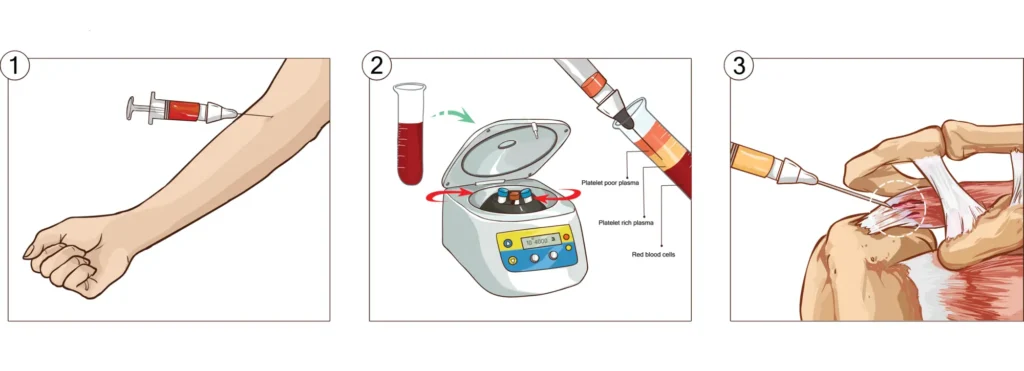
The PRP procedure is typically performed in an outpatient setting and involves several key steps:
- Blood Draw: A small volume of blood, similar to what is drawn for a routine blood test, is collected from the patient, usually from a vein in the arm.
- PRP Preparation (Centrifugation): The collected blood is then placed into a specialized centrifuge machine. This device spins the blood at high speeds, separating its components based on density. This process isolates the platelet-rich plasma layer. The concentration of platelets in this PRP solution can be 5 to 10 times greater than that found in normal blood.
- Injection: The concentrated PRP solution is carefully drawn into a syringe. Typically using ultrasound guidance, the physician precisely injects the PRP directly into the damaged area of the rotator cuff tendon.
The entire process, from blood draw to injection, generally takes around an hour. Patients can usually return home shortly after the procedure.
Potential Benefits of PRP Therapy for Rotator Cuff Tears
PRP therapy offers several possible advantages for individuals with rotator cuff tears. PRP stimulates the body’s natural healing and regenerative processes. Growth factors in PRP may help to modulate the inflammatory response, reducing pain and swelling at the injury site. As a non-surgical procedure, PRP avoids risks associated with surgery, such as infection, anesthesia complications, and prolonged recovery periods. It is an attractive option for patients seeking less invasive alternatives.
Who is a Candidate for PRP Therapy?
A thorough evaluation by an orthopedic specialist is often necessary to determine if PRP is the right treatment option. Generally, PRP may be considered for:
- Partial-Thickness Rotator Cuff Tears: Patients with partial tears who have not responded to conservative treatments like physical therapy, rest, and medication are often potential candidates for PRP.
- Chronic Tendinopathy: Individuals with chronic inflammation or degeneration of the rotator cuff tendons (tendinopathy) may benefit from PRP’s regenerative properties.
- As an Adjunct to Surgery: For full-thickness rotator cuff tears, PRP may be used in conjunction with surgical repair.
- Patients Seeking Non-Surgical Options: Those who wish to avoid surgery or are not suitable candidates for surgery due to other health conditions may find PRP an appealing alternative.
Recovery and Post-Procedure Care
Recovery after a PRP injection is a gradual process that plays a role in the overall success of the treatment. Immediately after the injection, patients are usually advised to rest the shoulder and avoid strenuous activities for a few days. Some mild pain, soreness, or pressure at the injection site is common and may be managed with over-the-counter pain relievers (generally avoiding NSAIDs, which may interfere with the healing process) and ice packs.
For several weeks following the injection, specific activity restrictions will be in place. This often includes avoiding heavy lifting, pulling, pushing, or any activities that put significant stress on the rotator cuff. A structured physical therapy program may begin, typically starting with gentle range-of-motion exercises and gradually progressing to strengthening exercises for the rotator cuff and surrounding shoulder muscles. The rehabilitation program is tailored to the individual’s specific tear, healing progress, and activity goals.
It’s important to understand that PRP therapy initiates a biological healing process that can unfold over weeks to months. While some patients may experience pain relief relatively quickly, tissue regeneration and functional improvement can take several weeks to a few months. Multiple PRP sessions may be recommended depending on the severity of the tear and the patient’s response to treatment.
Summary
Platelet-rich plasma (PRP) therapy offers a promising, minimally invasive option for many patients. By harnessing the powerful regenerative capabilities of the body’s own platelets, PRP aims to promote natural healing, reduce pain and inflammation, and restore shoulder function. The process is straightforward, involving a simple blood draw, concentration of platelets, and precise injection. Recovery requires adherence to post-procedure care and a dedicated rehabilitation program to optimize outcomes. Consultation with an experienced orthopedic specialist is important to determine if PRP therapy is the right choice for your specific condition.
Frequently Asked Questions
How many PRP injections will I need?
The number of injections varies depending on the severity of the rotator cuff tear and the patient’s response to treatment. Some patients may achieve improvement with a single injection, while others may require a series of 2-3 injections spaced several weeks apart.
How long does it take to see results from PRP therapy?
PRP therapy initiates a natural healing process, so results are not usually immediate. Patients may begin to notice improvements in pain and function within a few weeks, with more significant and sustained benefits typically observed over 2 to 6 months.
Can PRP heal a complete (full-thickness) rotator cuff tear?
For full-thickness tears, PRP is generally not considered a standalone cure. Its role is more established for partial-thickness tears. However, PRP can be a valuable adjunct during surgical repair of full-thickness tears, potentially enhancing healing and reducing re-tear rates. Your doctor will assess if it’s appropriate for your specific tear.