One of the most recognizable signs of an ACL tear is a sudden popping sound or sensation at the moment of injury, though other symptoms can also indicate this condition. In this post, we’ll review what an ACL tear is, common symptoms, and treatment options.
Key Takeaways
- ACL tears can occur during high-stress activities and often lead to knee instability, pain, and swelling.
- Prompt recognition of ACL tear symptoms and evaluation are important for effective diagnosis and treatment.
- Treatment options vary based on severity, with nonsurgical methods generally suitable for partial tears and surgical intervention typically recommended for complete tears.
Understanding ACL Tears
An ACL tear is an injury affecting the anterior cruciate ligament, a key stabilizer of the knee joint. This ligament is particularly necessary for activities involving sudden stops or directional changes. When torn, it can compromise knee stability, making daily tasks challenging.
ACL tears most frequently occur during sports activities that require abrupt movements, such as pivoting, cutting, or landing from a jump. These actions place significant stress on the knee ligaments, and a tear occurs when the ligament cannot withstand the force. While athletes are particularly at risk, ACL tears can affect anyone, also commonly resulting from accidents or falls.
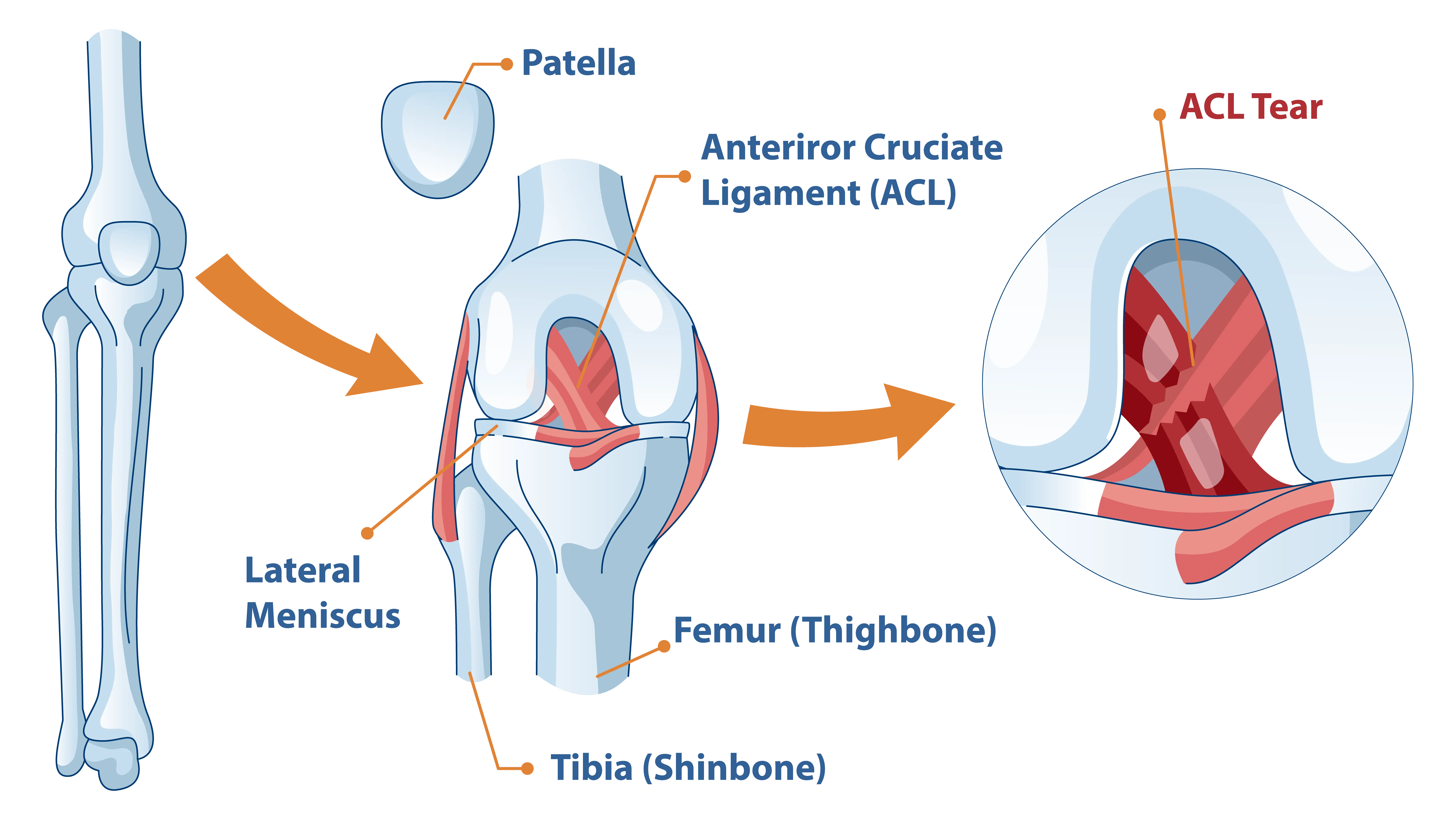
The severity of ACL injuries can range from partial tears, where the ligament is only partially damaged, to complete tears, where the ligament is completely torn. Understanding the nature of the injury can help with recognizing symptoms and choosing the right treatment path. Next, we’ll explore the symptoms patients typically experience from ACL tears.
Recognizing the Initial Symptoms of a Torn ACL
One of the most telling signs of an ACL tear is a sudden popping sound or sensation at the moment of injury. This pop is often accompanied by immediate and severe knee pain. The pain is usually sharp and intense, leading many to instinctively stop what they are doing and seek help.
Rapid swelling may follow the initial injury, typically within a few hours. Prompt recognition of these symptoms and diagnosis is important to prevent further damage and support better recovery outcomes.
Common Symptoms Following ACL Tears
After the initial shock and pain of an ACL tear, several common symptoms often persist:
- Knee instability
- Varying levels of pain
- Swelling and bruising
- Difficulty bearing weight on the injured leg
Each of these symptoms can interfere with your ability to perform everyday activities and maintain an active lifestyle. In the following subsections, we’ll break down each of these symptoms for a clearer understanding of what to look for.
The Sensation of Knee Instability
One of the most unsettling symptoms of a torn ACL is the sensation of knee instability. This may feel like the knee is about to “give out” or cannot support your weight, especially during activities that involve sudden stops or changes in direction.
This instability can negatively affect daily activities like walking, climbing stairs, or engaging in sports. In many cases, the knee’s range of motion is reduced, adding to the feeling of joint instability.
Pain Levels and Their Progression
The pain from an ACL tear is typically immediate and sharp, often severe enough to halt activity. In many cases, the initial intense pain subsides after a few hours and may transition into a dull, aching sensation over the next few days.
However, certain movements or activities can trigger sporadic sharp pains days after the injury. Resting the injured leg can reduce discomfort, but if pain worsens despite rest and self-care, it’s important to consult an experienced sports medicine specialist.
Swelling and Bruising
Swelling is a common reaction to ACL tears and usually indicates tissue damage and bleeding. It may begin within a few hours of injury and typically subsides within a few weeks, though in some cases, can linger longer. Bruising may also appear around the area and can last for a few weeks. These visible symptoms are indicators of the body’s response to the injury and should be monitored closely.
Difficulty Bearing Weight
A torn ACL can make it difficult or even impossible to bear weight on the injured leg. While some individuals may still manage to walk, particularly with partial tears or once swelling decreases, it should be approached with caution. Persistent pain or an inability to bear weight on the injured knee warrants evaluation by a sports medicine specialist.
Immediate Actions After Suspecting an ACL Tear
If you suspect an ACL tear, prioritize minimizing pain and swelling while preventing further injury. Seek medical evaluation for an accurate diagnosis and a proper treatment plan tailored to your needs.
Rest, ice, compression, and elevation (RICE) are commonly used to manage pain and swelling in the initial phase. Additionally, using a knee brace or crutches can keep the joint stabilized and supported as you walk. Ignoring ACL injury signs can lead to complications, so addressing these symptoms immediately is essential.
Diagnosis Process for ACL Tears
Diagnosing an ACL tear typically begins with a physical examination, where your doctor assesses swelling, range of motion, and compares the injured knee to the uninjured one. To confirm the diagnosis and evaluate surrounding structures, magnetic resonance imaging (MRI) is often used. This imaging helps identify the extent of damage and informs the treatment plan.
Treatment Options for Torn ACL
Treatment options for a torn ACL depend on the injury’s severity and the patient’s lifestyle. Nonsurgical treatment methods, such as physical therapy and bracing, can be effective for partial tears or less active individuals. These treatments focus on strengthening the muscles around the knee and improving stability.
For athletes or individuals with complete ACL tears, surgical intervention is usually recommended. ACL reconstruction involves replacing the damaged ligament with a tendon graft, which can help restore knee function and stability.
Your surgeon can work with you to determine the best treatment plan for your specific injury and recovery goals.
Recovery Time and Rehabilitation
Surgery recovery typically follows a structured protocol and often begins the same day as surgery. The focus is on reducing swelling and achieving full extension of the knee. Patients may be able to resume normal athletics around nine months after surgery, depending on individual progress and surgeon guidance.
For non-surgical management of mild ACL injuries, recovery can take 12 to 28 weeks. Proper rehabilitation is essential for regaining knee stability and preventing future injury.
Long-Term Implications of Untreated ACL Tears
Untreated, an ACL tear can lead to chronic knee instability, increased risk of cartilage damage, and a higher likelihood of developing osteoarthritis.
Additionally, ignoring an ACL injury can lead to a higher risk of additional injuries, including knee dislocation and meniscal tears. Addressing the injury minimizes these long-term risks.
Injury Prevention Strategies
Preventing ACL injuries involves strengthening the lower body and core muscles. Incorporating exercises that enhance flexibility, strength, and balance can significantly improve knee stability and reduce the risk of injury.
Additionally, incorporate proper warm-up routines into each workout that involve dynamic stretching, and maintain proper form during physical activities.
Summary
Recognizing and addressing ACL injuries early is important for effective management and optimal outcomes. Whether you’re dealing with a partial or complete tear, understanding your treatment options and following a proper recovery plan can play a major role in your long-term knee health. If you suspect an ACL injury, take action and consult an experienced sports medicine specialist to ensure the best possible care and recovery.
Frequently Asked Questions
Can you walk with an ACL injury?
Many patients can walk with an ACL injury, but it’s important to avoid any movements that involve turning, twisting, or pivoting to prevent further damage. Immediately after the injury or following surgery, crutches or braces may be recommended to stabilize the joint while walking.
What are the common symptoms of a torn ACL?
Common symptoms of a torn ACL are a popping sound during the injury, knee instability, swelling, bruising, inability to bear weight, and pain. If you experience these symptoms, consider seeking medical evaluation.
How are ACL injuries diagnosed?
ACL injuries are diagnosed primarily through physical examinations and MRI scans, which confirm the injury and assess severity.
What are the treatment options for an ACL injury?
The treatment options for an ACL injury include nonsurgical methods such as bracing and physical therapy, as well as surgical reconstruction, all aimed at restoring knee function and minimizing the risk of further injury. Your specific situation will guide the most appropriate choice.
What immediate actions should be taken after an ACL injury?
After an ACL injury, plan to stabilize the knee with braces or crutches, apply ice, and elevate the leg to minimize swelling. Taking these steps immediately can help manage pain and prevent further damage.