Shoulder pain is a condition that affects millions of individuals, interfering with quality of life, professional activities, and the ability to perform daily tasks. For those suffering from chronic shoulder issues, the traditional treatment pathway often involves rest, physical therapy, non-steroidal anti-inflammatory drugs (NSAIDs), and, in more severe cases, corticosteroid injections or surgical intervention. While these can be life-changing treatment options, a growing body of research supports an innovative, biological approach to healing: platelet-rich plasma (PRP) therapy. PRP offers a promising, minimally invasive option that harnesses the body’s own healing capabilities.
Key Takeaways
- PRP is a concentration of platelets derived from the patient’s own blood, rich in growth factors.
- The process involves a simple blood draw, centrifugation to concentrate the platelets, and injection into the target area of the shoulder.
- PRP may be indicated for chronic tendon issues, partial-thickness rotator cuff tears, mild to moderate shoulder osteoarthritis, and adhesive capsulitis (frozen shoulder).
What is Platelet-Rich Plasma (PRP)?
Platelets are small, disc-shaped blood cells primarily known for their role in blood clotting. However, they possess a secondary function: tissue repair and regeneration. When an injury occurs, platelets migrate to the site of damage and initiate the healing process. They accomplish this by releasing over 30 bioactive proteins, including a high concentration of growth factors. These growth factors perform several important functions, including stimulating cell proliferation and increasing collagen production.
PRP preparation increases platelet levels to approximately 5 to 10 times their normal physiological concentration. This creates a highly concentrated source of growth factors that, when injected, may help accelerate and enhance the body’s natural healing response within the shoulder joint.
When is PRP Recommended for Shoulder Pain?
The decision to recommend PRP therapy is based on a thorough evaluation of the patient’s condition, the underlying pathology, and the response to prior treatments. An experienced shoulder specialist can help guide whether PRP is an appropriate recommendation for your specific condition.
Rotator Cuff Pathologies
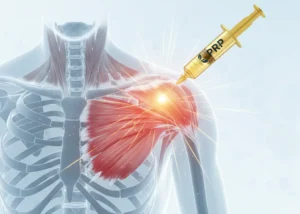
The rotator cuff, a group of four muscles and their tendons surrounding the shoulder joint, is a common site for shoulder pain. For rotator cuff tears that do not extend completely through the tendon, PRP can be a non-surgical treatment option. Tendinopathy is a degenerative condition characterized by chronic tendon breakdown. This condition often resists traditional treatments. Studies have shown that the direct injection of PRP into the site may help promote tendon healing, reduce pain, and improve function for some patients.
Shoulder Osteoarthritis (OA)
Osteoarthritis is a gradual, progressive condition that wears down the cartilage in the glenohumeral (shoulder) joint. PRP therapy may encourage the remaining cartilage cells to produce new, healthy cartilage components, which may help slow further damage.
Adhesive Capsulitis (Frozen Shoulder)
Frozen shoulder is a painful and restrictive condition where the capsule surrounding the shoulder joint thickens and tightens. The regenerative and anti-inflammatory properties of PRP may help to modulate the inflammatory and fibrotic processes within the joint capsule, leading to improved pain control and supporting improvements to range of motion, especially when combined with a dedicated physical therapy protocol.
Other Shoulder Conditions
PRP may also be utilized for other chronic soft tissue injuries around the shoulder, including:
- Acromioclavicular (AC) Joint Sprains and Degeneration: To promote ligament healing and reduce localized joint pain.
- Biceps Tendinopathy: For chronic pain and degeneration of the long head of the biceps tendon.
- Ligament Sprains and Instability: To promote the healing and strengthening of stretched or partially torn shoulder ligaments.
The PRP Procedure
The procedure is typically performed in an outpatient setting, and it generally takes around an hour. Below is an overview of the key steps involved in the PRP process.
Step 1: Patient Preparation and Blood Draw
On the day of the procedure, the patient is positioned comfortably. A standard blood draw is performed.
Step 2: Centrifugation and PRP Isolation
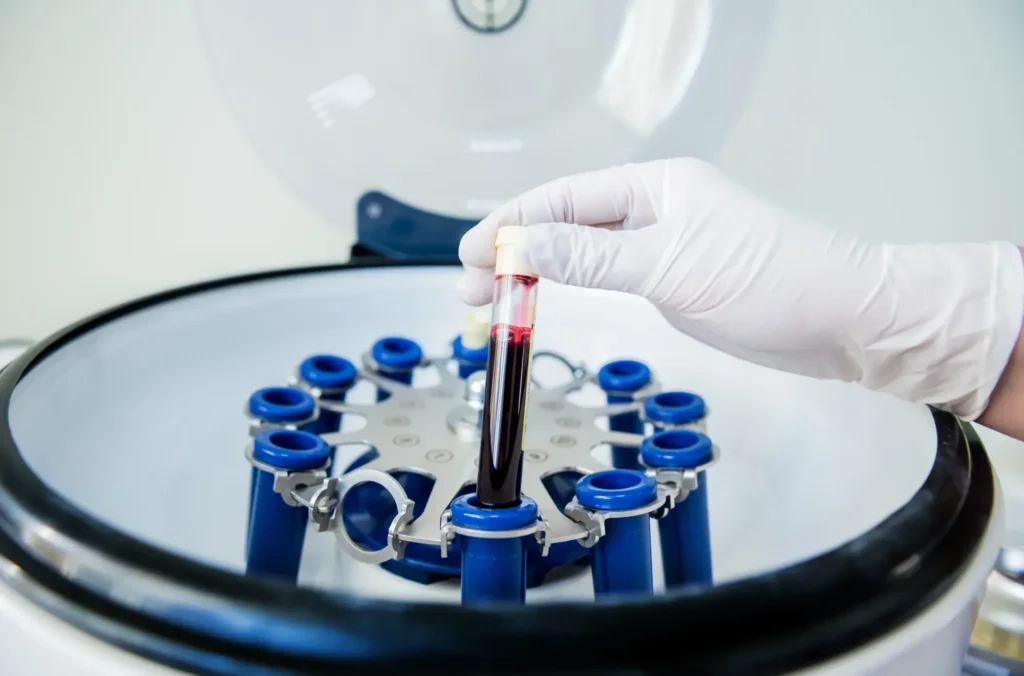
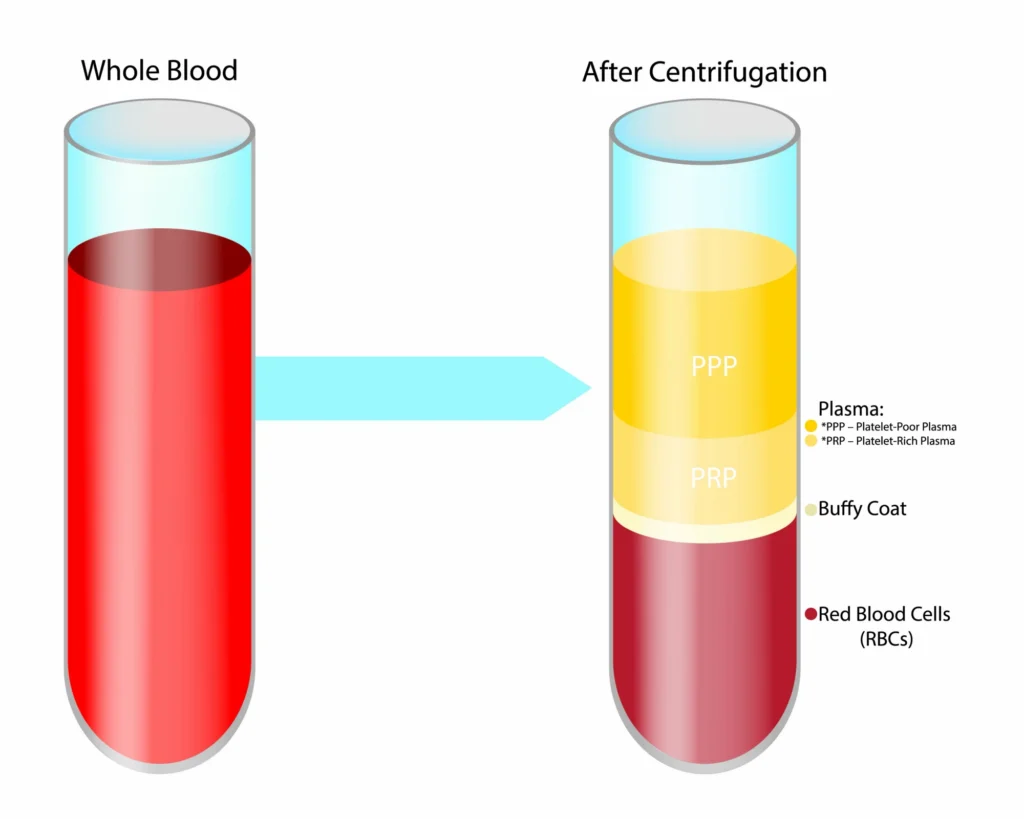
The collected blood is immediately transferred to a sterile, closed-system processing kit. This kit is then placed into a specialized centrifuge. The goal is to achieve a final PRP product with a platelet concentration 5 to 10 times the baseline, while carefully controlling the concentration of white blood cells (leukocytes).
Step 3: Image-Guided Injection
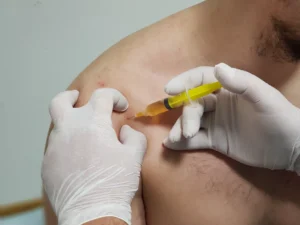
The injection of PRP into the shoulder is often performed under real-time ultrasound guidance. This allows the doctor to visualize the needle tip in relation to the target tissue to ensure the concentrated solution is delivered precisely to the area of pathology. Patients typically report a feeling of pressure, but the procedure is generally well-tolerated.
Step 4: Post-Procedure Care and Rehabilitation
PRP is a biological treatment that aims to initiate a healing cascade, which requires time. The following are steps that are frequently involved in post-procedure care:
- Immediate Post-Injection: Patients may be advised to avoid anti-inflammatory medications (NSAIDs) for a period, as these can interfere with the platelet activation and the initial inflammatory phase necessary for healing. Pain management may be limited to acetaminophen (Tylenol) and ice.
- Activity Restriction: Strenuous activity and heavy lifting are generally restricted for the first few weeks to protect the treated tissue while healing is underway.
- Physical Therapy: A structured, progressive physical therapy program is typically recommended. The PRP provides the biological foundation for repair, but physical therapy aims to organize the new tissue, restore range of motion, and rebuild strength.
What to Expect: The Timeline for Results
PRP is a biological therapy that works by stimulating the body’s own healing processes, so results may develop gradually over time rather than immediately. In the first week after injection, patients commonly experience mild to moderate soreness, stiffness, or a temporary increase in pain. This early discomfort reflects the inflammatory phase, a part of the healing cascade during which growth factors are activated.
Between one and three months, many patients experience a more noticeable reduction in pain and improvements in strength, flexibility, and function. Around three to six months is when the full therapeutic benefit of PRP is often realized. It’s important to emphasize that PRP is a process, not an instant fix. Adhering to the recommended post-injection rehabilitation and physical therapy program plays a key role in maximizing long-term results.
Summary
Platelet-rich plasma (PRP) therapy represents an advancement in the non-surgical treatment of chronic shoulder pain. By concentrating and delivering the body’s own growth factors directly to the site of injury, PRP offers a potential treatment option for conditions ranging from partial rotator cuff tears and chronic tendinopathy to mild shoulder osteoarthritis and frozen shoulder. PRP is a regenerative medicine treatment aimed at supporting long-term tissue repair and functional restoration.
Frequently Asked Questions
Is the PRP injection painful?
The procedure involves a blood draw and an injection, so some discomfort is expected. Post-injection, patients often experience a few days of mild to moderate soreness, stiffness, or aching, which is a sign that the healing process (the necessary inflammatory response) has begun. This post-injection discomfort may be managed with ice and non-NSAID pain relievers like acetaminophen.
How many PRP injections will I need?
The number of injections required varies based on the severity and chronicity of the injury and the patient’s response to the initial treatment. For some chronic tendinopathies or partial tears, a single injection may be sufficient to initiate healing. However, for more advanced conditions, a series of two or three injections, spaced several weeks apart, may be recommended to maximize the regenerative effect.
Can I take anti-inflammatory medications (NSAIDs) after the PRP injection?
Generally, no. These medications work by suppressing the inflammatory response, which is the mechanism by which the platelets are activated and initiate the healing cascade. Taking NSAIDs may diminish the effectiveness of the PRP treatment. Acetaminophen (Tylenol) may be the recommended alternative for pain relief during this period.
How soon can I return to work or activity?
Most patients can return to light, sedentary work the same day or the following day. However, a period of relative rest supports the shoulder. Strenuous activities and heavy lifting may be restricted for the first few weeks.