

Push-ups are a fundamental bodyweight exercise, valued for building upper-body and core strength. While a staple in many fitness routines, it is not uncommon for individuals to experience shoulder pain when doing push-ups. This discomfort can be both a nuisance and a warning sign. Understanding the potential causes of this pain is the first step toward addressing it and exercising safely.
Key Takeaways
- Shoulder pain when doing push-ups often stems from improper form, such as incorrect hand placement or elbow position.
- Overuse, muscle fatigue, and underlying conditions like shoulder impingement or rotator cuff issues are also common culprits.
- Modifying the exercise, such as performing push-ups on an incline or on your knees, may help reduce shoulder strain.
A Closer Look at the Shoulder Joint
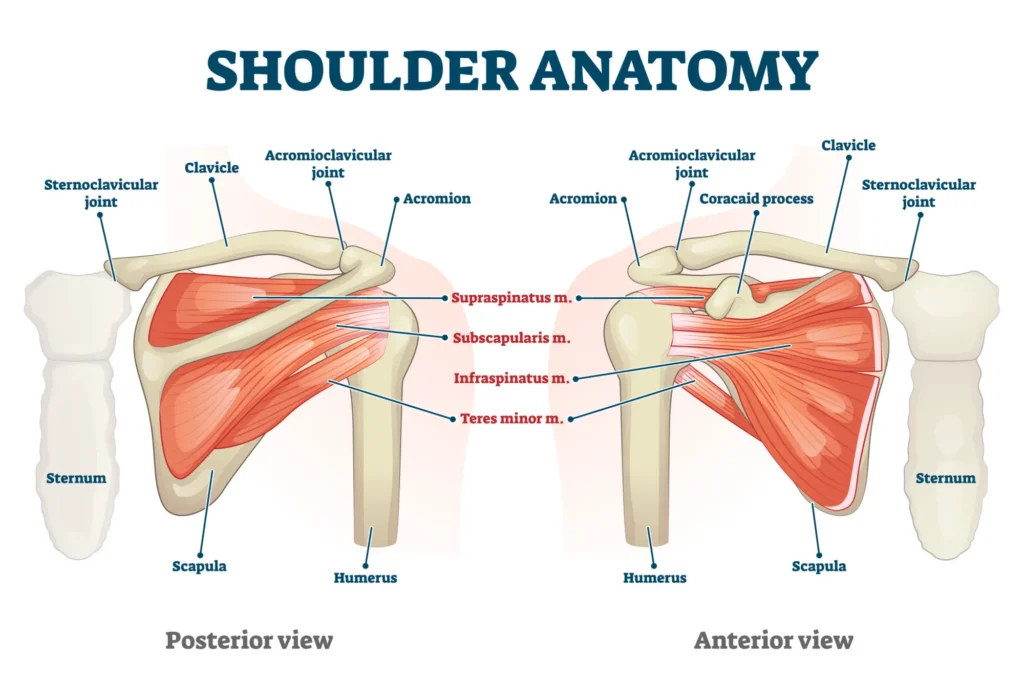
The shoulder is incredibly flexible, which allows you to move your arm in many different directions. However, this flexibility comes with less built-in stability. The main shoulder joint works like a ball and socket: the rounded top of the upper arm bone (humerus) sits in a shallow socket on the shoulder blade (scapula). This design allows for a wide range of motion, but it also means the joint relies heavily on muscles for support.
The shoulder is not just one joint; it’s a group of joints that work together. These include where the collarbone meets the breastbone (sternoclavicular joint), where the collarbone meets the shoulder blade (acromioclavicular joint), and the area where the shoulder blade glides along the rib cage (scapulothoracic joint). If any of these parts aren’t moving or working properly, it can affect how your shoulder feels during activities like push-ups.
To keep the shoulder stable, a group of four muscles called the rotator cuff surrounds the joint and helps hold the arm bone in place. The shoulder blade also relies on several supporting muscles to stay stable and move smoothly. During a push-up, all of these muscles must work together to support your body weight. If one part of this system isn’t doing its job, shoulder pain can develop.
Common Causes of Shoulder Pain During Push-Ups
Experiencing shoulder pain when doing push-ups can stem from various factors, from simple technique errors to more complex medical conditions. Identifying the root cause is important for effective management.
Improper Form and Technique
Even minor deviations from correct technique can place undue stress on the shoulder joint.
- Incorrect Hand Placement: Placing hands too wide can increase strain and may lead to impingement, where rotator cuff tendons get pinched. Hands should generally be positioned slightly wider than your shoulders. Conversely, placing the hands too narrowly can also cause issues, particularly for the wrists and the front of the shoulder.
- Elbow Flaring: Allowing elbows to flare out to the sides (a “T” shape) places the shoulder in a vulnerable position, stressing the rotator cuff. Elbows should be tucked closer to your body, at about a 45-degree angle. This position allows for better engagement of the chest and triceps while protecting the shoulder joint.
- Poor Core and Scapular Stability: A push-up is a full-body exercise. A weak core can cause your hips to sag, placing more load on your shoulders. Similarly, if muscles around the shoulder blades (scapulae) fail to stabilize the joint, it can lead to inefficient movement and pain.
Overuse and Muscle Fatigue
Doing too much, too soon, can lead to overuse injuries. The shoulder’s muscles and tendons need time to adapt to stress. A dramatic increase in push-up volume without adequate recovery can cause pain. This is especially true for individuals who are new to exercise or who are returning after a long break.
Muscle fatigue also contributes to shoulder pain. As primary pushing muscles like the pectorals and triceps tire, your form may break down. This often causes other muscles, including those in the shoulder, to compensate in ways that result in strain. This compensation can be subtle at first, but over time it can lead to pain and even injury.
Underlying Shoulder Conditions
Sometimes, shoulder pain when doing push-ups is a symptom of an underlying medical condition, which the exercise can exacerbate. An experienced shoulder specialist can evaluate the condition and help guide diagnosis and treatment.
- Shoulder Impingement Syndrome: This occurs when the space between the top of the shoulder blade (acromion) and the rotator cuff tendons narrows, causing the acromion to rub against the tendons and bursa, leading to inflammation. Improper push-up form can worsen this.
- Rotator Cuff Issues: The rotator cuff tendons can become inflamed (tendinopathy) or even tear from overuse or injury. A push-up places demand on the rotator cuff, and if these tendons are compromised, it can cause pain. The pain is often described as a deep ache in the shoulder and can be worse at night.
- Biceps Tendinitis: The long head of the biceps tendon passes through the front of the shoulder and can become inflamed from overuse, leading to pain in the front of the shoulder during push-ups. This pain can be sharp and may be accompanied by a clicking or snapping sensation.
- Shoulder Instability: In some individuals, loose ligaments can lead to a feeling of instability. The compressive forces of a push-up can be painful in an unstable shoulder. This can be due to a previous injury, such as a dislocation, or it can be a result of generalized ligamentous laxity.
- Arthritis: Osteoarthritis can affect the shoulder joint, causing cartilage to wear down. This can lead to pain and stiffness aggravated by exercises like push-ups. The pain is frequently described as a deep, aching pain that is worse with activity and may be accompanied by a grinding sensation.
Modifications for Exercising with Shoulder Pain
If you experience shoulder pain when doing push-ups, you don’t necessarily have to stop. Modifying the exercise can allow you to continue building strength while reducing strain. These variations are also great for beginners.
Incline Push-Ups
Performing a push-up on an incline can help decrease the load on your shoulders. You can use a wall, a sturdy table, or a bench. Place your hands on the elevated surface and walk your feet back until your body is straight. Perform the push-up with the same proper form, keeping your elbows tucked and core engaged.
Knee Push-Ups
Performing the push-up from your knees reduces the body weight you are lifting, which can alleviate stress on the shoulder joints. It is important to maintain a straight line from your head to your knees, engaging your core to prevent your hips from sagging. This modification is a way to build strength and endurance before progressing to the full push-up.
Wall Push-Ups
For those with pain or in early rehabilitation, wall push-ups can be a good starting point. Stand facing a wall, place your hands on it at shoulder height, and perform the push-up motion. This variation places the least amount of stress on the shoulders and is a safe way to practice the movement pattern.
Summary
Shoulder pain when doing push-ups is a common issue, often traced back to improper form, overuse, or an underlying condition. Mistakes like wide hand placement or flared elbows place unnecessary stress on the shoulder joint. Addressing this pain may start with perfecting your push-up form. If standard push-ups are painful, modifications like incline or knee push-ups can help you continue training with less strain.
While many cases of shoulder pain can be managed, it is important to listen to your body. If experiencing persistent, sharp, or worsening pain, consider being evaluated for an accurate diagnosis and a tailored treatment plan to help you return to your fitness routine safely.
Frequently Asked Questions
How do I know if my push-up form is correct?
Recording a video of yourself from the side and front is one of the best ways to check your form. From the side, you should see a straight line from your head to your heels. From the front, you can check your hand placement and ensure your elbows are not flaring out too wide. You can also meet with a physical therapist or coach to correct your form.
What are some good warm-up exercises before doing push-ups?
A good warm-up increases blood flow and prepares the joints for movement. Before push-ups, consider dynamic stretches like arm circles, shoulder rolls, and torso twists. Performing a few scapular push-ups can also help activate the muscles that stabilize your shoulder blades.
Should I use ice or heat for shoulder pain after push-ups?
For acute pain or suspected inflammation, ice may be recommended for the first 24-48 hours to reduce inflammation. For muscle soreness or stiffness not related to an acute injury, heat can be beneficial, as it helps relax tight muscles and improve blood flow. These general strategies may help with soreness, but consult your doctor for guidance specific to your condition.