

If you’ve ever struggled to reach the top shelf or winced while buckling a seatbelt, you may be dealing with shoulder stiffness. It’s one of the most common complaints that brings patients to my practice. Shoulder stiffness can range from mild tightness after a period of inactivity to a deeply limiting condition that disrupts sleep, work, and everyday independence. In this post, we’ll walk through what shoulder stiffness is, what causes it, and what treatment options may be available.
Key Takeaways
- Shoulder stiffness refers to a noticeable loss of range of motion in the shoulder, often accompanied by pain, aching, or tightness.
- Common causes include frozen shoulder (adhesive capsulitis), rotator cuff injuries, osteoarthritis, and stiffness following surgery or injury.
- Many patients respond well to conservative approaches, including physical therapy, anti-inflammatory medications, and corticosteroid injections.
- When conservative care isn’t sufficient, more advanced options may be recommended.
What Is Shoulder Stiffness?
The shoulder is the most mobile joint in the human body. It allows you to lift, rotate, reach, and throw, often without giving it a second thought. But that remarkable range of motion comes with a trade-off. Compared to more inherently stable joints, the shoulder depends heavily on surrounding muscles, tendons, ligaments, and the joint capsule to keep things functioning well.
When any of those structures becomes inflamed, damaged, or too tight, movement starts to suffer. Shoulder stiffness broadly describes a reduction in how far or how freely your shoulder can move. That might look like an inability to raise your arm above shoulder height. It could mean difficulty rotating your arm behind your back, or a persistent sense of resistance every time you try to move in a certain direction.
What makes shoulder stiffness worth addressing is what tends to happen when it goes untreated. The shoulder generally benefits from regular, appropriate movement to maintain mobility and function. Without regular movement, the joint capsule can become tighter over time, which may contribute to increased stiffness in some cases.
Common Causes of Shoulder Stiffness
Shoulder stiffness rarely appears without reason. It typically develops as a result of an underlying condition, a prior injury, or prolonged reduced activity. Here are some of the most common causes I see in practice.
Frozen Shoulder (Adhesive Capsulitis)
Frozen shoulder, clinically known as adhesive capsulitis, is one of the most well-known causes of shoulder stiffness. It occurs when the connective tissue surrounding the shoulder joint, called the joint capsule, becomes inflamed and progressively tightens. This tightening gradually restricts the shoulder’s range of motion. The exact trigger isn’t always clear. That said, it tends to appear more often in people between the ages of 40 and 60 and affects women somewhat more frequently than men. Certain health conditions, particularly diabetes, may also raise the risk.
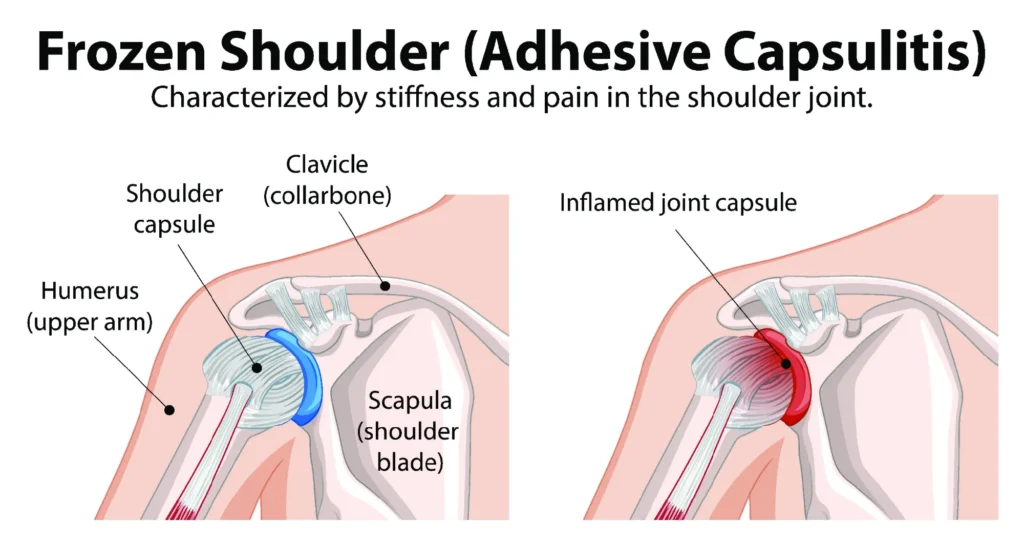
Frozen shoulder typically progresses through three stages. The “freezing” stage brings increasing pain and declining motion. The “frozen” stage sees stiffness peak, though pain may actually ease somewhat. Finally, the “thawing” stage involves a gradual return of mobility. The full process can span one to three years, though individual experiences vary.
Osteoarthritis of the Shoulder
Shoulder arthritis develops as the cartilage cushioning the bones in the shoulder joint gradually wears down. As that protective layer thins, bones may begin to rub against one another, causing pain, inflammation, and stiffness. Shoulder osteoarthritis tends to develop slowly and is more common in older adults, though it can also follow a history of injury or high-demand overhead activity over many years.
Post-Surgical or Post-Injury Stiffness
Some degree of shoulder stiffness after surgery or a significant injury is not unusual. As tissue heals, the body forms scar tissue. When that scar tissue develops around the joint, it may limit movement if not managed properly. This is a key reason why post-operative physical therapy or a home exercise program is so important. Keeping the shoulder moving through the appropriate stages of healing helps prevent scar tissue from becoming a long-term source of restriction.
Recognizing the Symptoms
Shoulder stiffness tends to present in a recognizable pattern, though the experience can differ from person to person. Common symptoms include:
- Difficulty raising your arm overhead or out to the side
- Trouble reaching behind your back, such as fastening clothing or reaching a back pocket
- Pain when moving the shoulder, particularly at the outer limits of your range of motion
- A dull ache that tends to worsen at night or after periods of rest
- A sensation of tightness or resistance within the shoulder during movement
- Weakness in the arm with certain movements, especially overhead ones
Shoulder stiffness can take time to set in, creeping up over weeks or months. Early symptoms are easy to dismiss as general muscle soreness or simply getting older. By the time the limitation becomes noticeable enough to prompt a medical visit, the underlying condition may already be well established. Persistent or worsening symptoms are worth taking seriously; earlier evaluation may support a smoother path to recovery.
How Is Shoulder Stiffness Diagnosed?
When you come to see an experienced shoulder specialist for an evaluation, the process usually begins with a thorough conversation about your health history and symptoms. Your doctor will want to know when the stiffness started, whether it followed an injury or period of inactivity, and how it’s affecting your daily life. A detailed physical examination follows, during which range of motion is assessed.
Imaging tests may be ordered as well. X-rays help evaluate the bones. If soft tissue involvement is suspected, such as a rotator cuff tear, an MRI may be ordered.
Treatment Options for Shoulder Stiffness
Most of my patients have a range of effective options available to them. I take a personalized approach to every case. The recommended plan will depend on the underlying cause, the degree of restriction, and your individual health and activity goals.
Physical Therapy
Physical therapy is frequently a component of treatment for shoulder stiffness. A skilled therapist guides you through stretching and mobility work to gradually restore range of motion, along with strengthening exercises to support the joint. A home exercise program is typically part of the plan as well. Consistency matters here. Gentle, regular movement over time tends to outperform sporadic, aggressive sessions.
Anti-Inflammatory Medications
Nonsteroidal anti-inflammatory drugs (NSAIDs) such as ibuprofen or naproxen may help manage pain and reduce inflammation, making it easier to participate in physical therapy. These are generally used as part of a broader treatment plan rather than a standalone solution.
Corticosteroid Injections
For patients experiencing significant pain that limits participation in rehabilitation, a corticosteroid injection into the shoulder joint may provide meaningful relief. These injections help calm the inflammatory response and can create a more comfortable window during which therapy becomes more productive.
Manipulation Under Anesthesia
When conservative treatments haven’t produced adequate improvement, particularly with frozen shoulder, manipulation under anesthesia (MUA) may be an option. The patient is placed under anesthesia, and I carefully move the shoulder through its range of motion to release the adhesions restricting movement. This is typically followed by a focused period of physical therapy to build on the progress achieved.
Arthroscopic Surgery
In cases where other approaches haven’t delivered sufficient relief, arthroscopic surgery may be recommended. I use a small camera and specialized instruments to directly release scar tissue or adhesions inside the shoulder joint. This minimally invasive approach may involve a shorter recovery than open surgery, and rehabilitation generally begins relatively soon after the procedure.
Shoulder Replacement
When shoulder stiffness is primarily driven by significant arthritis or joint degeneration, shoulder replacement surgery may offer the most durable path to restored function and lasting pain relief. My Precision Shoulder Replacement™ is a personalized approach to shoulder arthroplasty. The goal is to address pain and restore meaningful motion.
When Should You See a Doctor?
Not every stiff shoulder requires an immediate orthopedic visit. Mild tightness after unusual physical activity may ease with rest and gentle movement over a week or two. That said, certain situations may warrant earlier evaluation:
- Stiffness that has persisted for more than a few weeks without improvement
- A progressive loss of motion that is affecting work, sleep, or daily activities
- Pain at rest or at night that consistently disrupts sleep
- Stiffness that developed following an injury, fall, or surgery
- Any combination of pain, weakness, and reduced range of motion
Summary
Shoulder stiffness is a common and often underestimated condition that can quietly chip away at your quality of life. Whether it stems from frozen shoulder, a rotator cuff injury, or simply a period of reduced activity, the message tends to be the same: the shoulder needs regular movement to stay healthy. When stiffness takes hold, it deserves thoughtful attention, not just to manage the symptom, but to identify and address the underlying cause.
Frequently Asked Questions
Can shoulder stiffness go away on its own?
In mild cases, shoulder stiffness may ease with rest, gentle movement, and time. However, if it persists for more than a few weeks or begins to interfere with daily activities, it may be worth having it evaluated.
Is it safe to exercise with a stiff shoulder?
Gentle, targeted movement is often a core part of treating shoulder stiffness, so staying completely still is rarely the right answer. That said, which exercises are appropriate and which to avoid depends on the cause of your stiffness. Getting guidance from your doctor or physical therapist before starting any routine is generally wise to make sure you’re supporting recovery rather than aggravating the problem.
When should surgery be considered?
Surgery is generally considered when conservative treatments haven’t provided adequate improvement over a reasonable period of time. For some patients, procedures such as arthroscopic release or manipulation under anesthesia may be the appropriate next step. In cases where stiffness is driven primarily by arthritis or significant joint degeneration, shoulder replacement may offer the most effective long-term solution. A shoulder specialist can evaluate your situation and walk you through the options that make the most sense for you.