Whether you’re a recreational or competitive athlete, sports knee injuries can significantly impact your ability to perform and enjoy the activities you love. The knee is one of the body’s largest and most complex joints, and it bears substantial force during athletic activities. Sports knee injuries are among the most common orthopedic conditions, affecting athletes across all age groups and skill levels. Understanding these injuries, their symptoms, and treatment options can help you make informed decisions about your knee health and recovery.
Key Takeaways
- ACL and meniscus injuries are among the most common and serious sports-related knee injuries, often occurring during pivoting, cutting, or sudden impact.
- Ligament sprains such as MCL and LCL injuries frequently respond well to conservative treatment, though severe cases may require surgical intervention.
- Overuse conditions like patellar tendinitis typically develop gradually from repetitive stress and may worsen without activity modification and proper rehabilitation.
- Early evaluation, appropriate treatment, and preventive strategies may support outcomes and reduce recovery time.
The Anatomy of the Athletic Knee
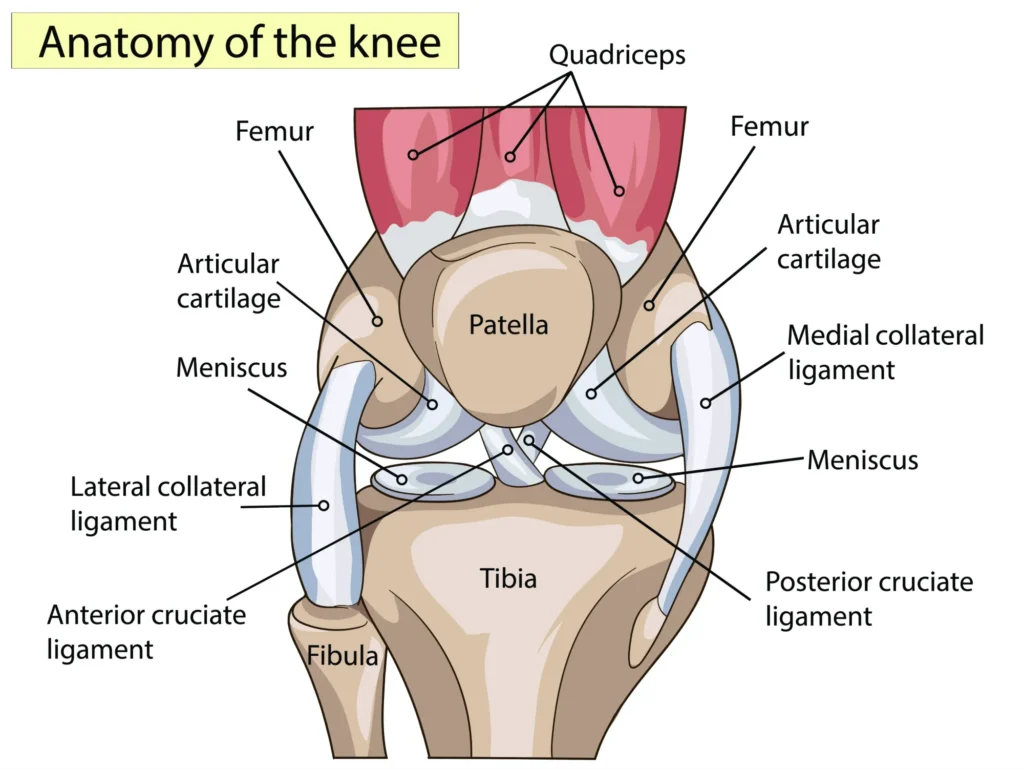
To understand sports knee injuries, it helps to know the basic structure of the knee. The knee joint connects the thighbone (femur) to the shinbone (tibia). The kneecap (patella) sits in front of the joint, providing protection and improving leverage for the thigh muscles.
The knee contains four primary ligaments that act like strong ropes to hold the bones together. The anterior cruciate ligament (ACL) and posterior cruciate ligament (PCL) cross inside the knee joint, controlling forward and backward motion. The medial collateral ligament (MCL) runs along the inner side, while the lateral collateral ligament (LCL) runs along the outer side.
Two wedge-shaped pieces of cartilage called menisci sit between the femur and tibia, acting as shock absorbers. The articular cartilage covers the bone ends, providing a smooth surface for movement. Various tendons, including the patellar tendon and quadriceps tendon, connect muscles to bones and help power knee movement.
Anterior Cruciate Ligament (ACL) Injuries
Anterior cruciate ligament injuries rank among the most common sports knee injuries, particularly for athletes who participate in sports involving cutting, pivoting, or jumping movements. An ACL tear often happens when an athlete plants their foot and rapidly changes direction, decelerates suddenly, or lands awkwardly from a jump. Many athletes report hearing or feeling a “pop” in the knee at the time of injury. The knee may swell within hours, and patients often describe a feeling of instability.
The severity of ACL injuries can vary from mild sprains to complete tears. Diagnosis typically begins with a physical examination and may include MRI imaging to confirm the injury and assess for associated damage.
For many younger or highly active individuals who wish to return to pivoting sports, ACL reconstruction surgery may be recommended. This procedure involves replacing the torn ligament with a graft, commonly taken from the patient’s own patellar tendon, hamstring tendon, or quadriceps tendon. The surgery is typically performed arthroscopically.
Recovery from ACL reconstruction requires commitment and patience. Many athletes may need six to nine months or longer of rehabilitation before returning to competitive sports, focusing on regaining range of motion, building strength, and gradually returning to sport-specific activities.
Meniscus Tears
The menisci play a key role in knee function, acting as shock absorbers between the femur and tibia. Athletes may tear a meniscus through a forceful twisting motion, often while the foot remains planted and the knee is bent. Older athletes may experience tears from relatively minor movements due to age-related degeneration.
Symptoms can include pain along the joint line, swelling within 24 to 48 hours, stiffness, catching or locking, and difficulty fully straightening the leg. The location of the tear can significantly affect healing potential. The outer third of the meniscus has a better blood supply and may heal with conservative treatment or surgical repair, depending on factors such as tear pattern, stability, patient age, and associated knee injuries. The inner two-thirds lack blood supply, making healing less likely without intervention.
Treatment approaches vary based on tear characteristics. Small, stable tears in patients with minimal symptoms may respond well to rest, physical therapy, and activity modification. Larger tears or those causing mechanical symptoms often benefit from arthroscopic surgery, where an experienced knee surgeon can either repair the torn meniscus or remove the damaged portion while preserving as much healthy tissue as possible.
Medial and Lateral Collateral Ligament Injuries
The collateral ligaments provide important side-to-side stability to the knee. These injuries often result from a direct blow to the knee or from a twisting injury that places stress on the ligaments.
Collateral ligament injuries often respond well to conservative treatment. The MCL in particular usually has a rich blood supply, which can promote healing. Many isolated MCL injuries can be managed without surgery through a combination of rest, ice, compression, elevation, bracing, and physical therapy. Severe tears or injuries involving multiple ligaments may require surgical intervention. Surgery becomes more likely when a collateral ligament injury occurs in combination with ACL or PCL tears, as these complex injuries may compromise knee stability significantly.
Patellar Tendonitis (Jumper’s Knee)
Patellar tendonitis develops from repetitive stress on the patellar tendon, which connects the kneecap to the shinbone. This condition commonly affects athletes in jumping sports like basketball, volleyball, and track and field. However, it can occur in any sport involving repetitive knee extension.
The condition typically develops gradually, where athletes initially notice pain below the kneecap during or after activity. As the condition progresses, pain may occur during daily activities like climbing stairs.
Several factors can contribute to development. Training errors, such as sudden increases in volume or intensity, place excessive stress on the tendon. Muscle imbalances, particularly weak hip or core muscles, can alter knee mechanics. Tight quadriceps or hamstring muscles may increase tendon tension.
Conservative treatment is effective for many patients. The initial focus involves reducing tendon load through activity modification, ice, and anti-inflammatory medications. Physical therapy usually becomes central to recovery. In some cases, platelet-rich plasma injections may be considered as a treatment option.
Posterior Cruciate Ligament (PCL) Injuries
Posterior cruciate ligament injuries occur less frequently than ACL tears but can significantly impact knee function. The PCL prevents the tibia from sliding backward relative to the femur. Most PCL injuries in sports result from a direct blow to the front of the shin while the knee is bent. Unlike ACL tears, PCL injuries may cause less dramatic symptoms. Swelling is often mild, and athletes may not report a specific “pop.” Pain typically localizes to the back of the knee. Physical examination and MRI can support the diagnosis and assess for associated injuries.
Many isolated PCL tears can be managed non-operatively. Conservative treatment emphasizes protecting the knee and progressive rehabilitation focused on quadriceps strengthening. Surgery may be recommended for severe tears or injuries occurring in combination with other ligament damage.
Preventing Sports Knee Injuries
While not all sports knee injuries can be prevented, several strategies may help reduce risk. A comprehensive prevention program typically includes proper warm-up, strength training (particularly quadriceps, hamstrings, hip muscles, and core), flexibility exercises, and plyometric training to teach proper force absorption. Balance and proprioception exercises can help enhance body awareness and knee control.
Equipment considerations also matter. Appropriate footwear for your sport and playing surface can influence knee stress. Training progression deserves attention as well. Gradual increases in training volume and intensity allow tissues to adapt.
When to Seek Medical Attention
Immediate medical attention may be advisable if you experience significant swelling within hours of injury, inability to bear weight on the leg, obvious deformity, or severe pain. An evaluation is also generally recommended for persistent pain that doesn’t improve with rest, recurring episodes of the knee giving way, locking or catching sensations, or symptoms that interfere with daily activities.
Summary
Sports knee injuries affect athletes at all levels and include a wide range of conditions, from acute ligament tears to chronic overuse injuries. The knee’s complex structure and role in athletic movement make it particularly vulnerable to injury from trauma, repetitive stress, and improper mechanics. Advances in orthopedic care have improved diagnosis, treatment, and recovery for many knee injuries. Successful outcomes often depend on accurate evaluation, appropriate treatment planning, and commitment to rehabilitation.
Prevention is an important part of long-term knee health. Proper conditioning, neuromuscular training, attention to technique, and gradual training progression may help reduce injury risk. When injuries do occur, early evaluation and evidence-based care can support a safe return to activity. Working with an orthopedic specialist experienced in sports medicine helps ensure care is tailored to each athlete’s needs, goals, and activity level.
Frequently Asked Questions
How long does it take to recover from an ACL reconstruction?
Recovery after ACL reconstruction varies from person to person. Many athletes return to competitive sports around six to nine months or longer after surgery, depending on healing and progress in rehabilitation. Early recovery focuses on reducing swelling and restoring knee motion. Strengthening exercises are gradually introduced and continue over the next several months. Sport-specific training typically begins later in the recovery process. Return-to-play decisions are based on meeting functional goals rather than a fixed timeline.
Can meniscus tears heal without surgery?
Some meniscus tears heal without surgical intervention. Small, stable tears in the outer portion of the meniscus, which has a good blood supply, may heal with conservative treatment including rest, physical therapy, and activity modification. However, larger tears, tears in the inner portion, tears causing locking or catching, or tears that don’t improve with conservative treatment may benefit from arthroscopic surgery.
How can I prevent sports knee injuries?
Preventing sports knee injuries involves a combination of proper training and smart habits. Focus on strength training for the legs, hips, and core, and include flexibility exercises in your routine. Learning proper movement techniques, such as safe landing and cutting mechanics, can help reduce stress on the knee. Warming up before activity, allowing enough recovery time, wearing appropriate footwear, and gradually increasing training intensity are also important. Working with a qualified trainer or physical therapist can help create a prevention program tailored to your sport and goals.