The shoulder represents one of the most mobile and complex joints in the human body. Athletes across virtually all sports rely on healthy shoulders for optimal performance. Whether you’re a baseball pitcher, a swimmer, a tennis player, or someone who enjoys various recreational sports, your shoulders face unique stresses and demands. Some sports shoulder injuries can sideline even the most dedicated athletes. Understanding these injuries, recognizing warning signs early, and seeking appropriate treatment can make a difference in recovery outcomes and return to sport.
Key Takeaways
- Sports shoulder injuries commonly include rotator cuff tears, labral injuries, shoulder dislocations, and AC joint separations.
- Overhead athletes face particularly high risks for shoulder problems due to repetitive motion and stress.
- Proper warm-up, strength training, and technique modification may reduce the risk of many shoulder injuries.
Understanding the Athletic Shoulder
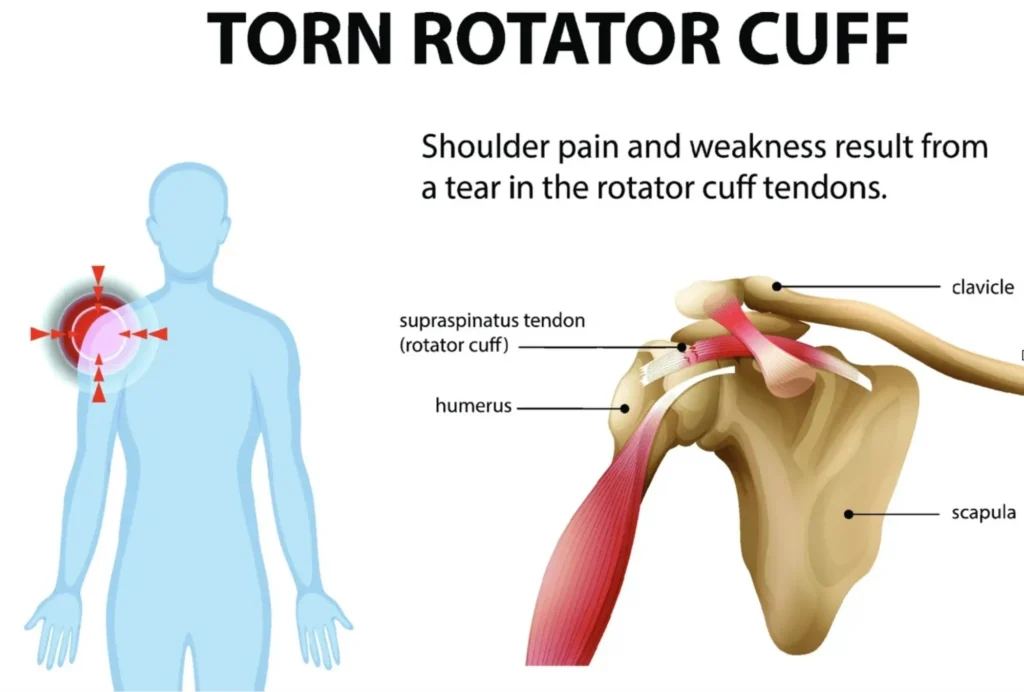
The shoulder joint differs from most other joints in your body. Rather than relying primarily on bone structure for stability, the shoulder depends on soft tissues. This design allows for a remarkable range of motion but creates vulnerability to injury. Four muscles and their tendons form the rotator cuff, which surrounds the shoulder joint. These muscles work together to stabilize the shoulder while allowing movement in multiple directions.
The labrum, a ring of cartilage, deepens the socket and helps keep the ball of the upper arm bone in place. Ligaments connect bones and provide additional stability. Athletes who perform repetitive overhead motions often place tremendous stress on these structures. Over time, this stress can lead to various injuries.
Common Sports Shoulder Injuries
Rotator Cuff Tears
Rotator cuff tears are commonly seen in athletes, particularly those involved in overhead sports. These tears can develop suddenly from acute trauma or gradually from repetitive stress. Baseball pitchers, volleyball players, and swimmers often experience rotator cuff problems. The injury may involve one or more of the four rotator cuff tendons. Symptoms may include pain with overhead activities, weakness when lifting or rotating the arm, and night pain that disrupts sleep. Some athletes notice a catching sensation or hear clicking sounds with certain movements.
Labral Tears and SLAP Lesions
The labrum can tear in several different patterns. SLAP lesions (Superior Labrum Anterior to Posterior) affect the top portion of the labrum where the biceps tendon attaches. These injuries commonly occur in throwing athletes and those who fall on an outstretched arm. Tennis players, quarterbacks, and baseball pitchers may face elevated risks for labral injuries.
Athletes with labral tears frequently describe deep shoulder pain, a catching or locking sensation, and feelings of instability. The shoulder may feel like it wants to slip out of place during certain movements. Many athletes report that their shoulder feels different or less stable than before the injury occurred.
Shoulder Dislocations and Instability
Shoulder dislocations happen when the ball of the upper arm bone comes completely out of the socket. Contact sports athletes, particularly those in football, hockey, and rugby, experience these injuries with some regularity. The first dislocation usually occurs from significant trauma, but subsequent dislocations may happen more easily.
After a dislocation, the shoulder may become chronically unstable. Some athletes develop recurrent subluxations, where the shoulder partially slips out of place but spontaneously reduces. This instability can interfere with athletic performance and increase the risk of additional injuries.
AC Joint Separations
The acromioclavicular (AC) joint connects the collarbone to the shoulder blade. AC joint separations occur when ligaments supporting this joint become stretched or torn. Contact sports athletes commonly experience these injuries from direct blows to the shoulder or falls onto the point of the shoulder. Cyclists, football players, and hockey players see these injuries frequently.
Depending on severity, AC joint separations range from mild sprains to complete separations. Athletes may notice a visible bump on top of the shoulder, pain with overhead activities, and tenderness directly over the AC joint. Cross-body movements often provoke discomfort.
Shoulder Impingement Syndrome
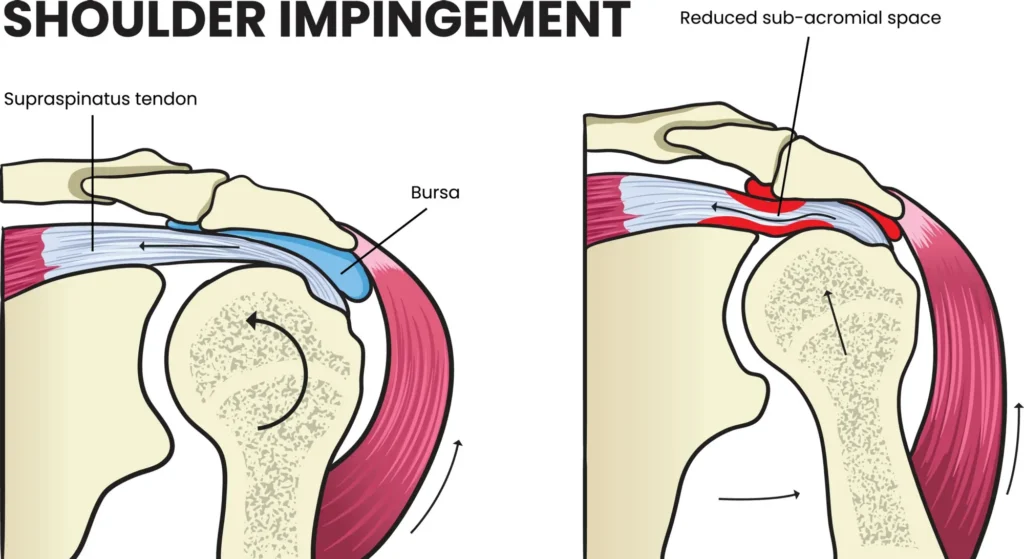
Shoulder impingement occurs when the rotator cuff tendons become compressed between the upper arm bone and the roof of the shoulder (acromion). Repetitive overhead activities can lead to inflammation and progressive tendon damage. Swimmers, tennis players, and baseball players commonly develop impingement problems. Poor posture, muscle imbalances, and anatomical variations may contribute to impingement development.
Athletes generally report a gradual onset of pain with overhead reaching, difficulty sleeping on the affected side, and weakness with certain movements. The pain may initially occur only during or after activity but can progress to constant discomfort.
Biceps Tendon Injuries
The long head of the biceps tendon runs through the shoulder joint before attaching to the labrum. This tendon can become inflamed (tendonitis) or can tear partially or completely. Weightlifters, tennis players, and overhead athletes may develop biceps tendon problems. The injury sometimes occurs in conjunction with other shoulder pathologies.
A complete biceps rupture often produces a characteristic “Popeye” deformity, where the muscle bunches up in the upper arm. Partial tears and tendonitis cause pain in the front of the shoulder that may radiate down the arm. Many athletes notice increased pain with overhead activities or when lifting objects.
Risk Factors for Sports Shoulder Injuries
Several factors can increase an athlete’s vulnerability to shoulder injuries. Age can play a role, as rotator cuff tears become more common with advancing years. Previous shoulder injuries may also predispose athletes to future problems.
Sport-specific demands matter considerably. Overhead athletes face higher risks than those whose sports don’t require repetitive overhead motion. Training volume and intensity influence injury rates, as athletes who increase activity levels too quickly may overwhelm their shoulders’ adaptive capacity. Poor technique can place abnormal stresses on shoulder structures, gradually leading to injury.
Muscle imbalances and weakness are associated with many shoulder problems. The muscles that stabilize the shoulder blade (scapula) play key roles in shoulder health. When these muscles function improperly, the shoulder joint experiences abnormal mechanics. Inadequate warm-up, fatigue, and overtraining also elevate injury risks.
Diagnosing Sports Shoulder Injuries
Proper diagnosis begins with a thorough history and physical examination. An experienced orthopedic surgeon can guide the process. The examination typically includes assessment of range of motion, strength testing, and special maneuvers designed to stress specific structures.
Imaging studies help confirm the diagnosis and determine injury severity. X-rays can identify fractures, dislocations, and bone spurs but don’t show soft tissue injuries well. MRI scans provide detailed images of the rotator cuff, labrum, and other soft tissues. Sometimes an MRI arthrogram, which involves injecting contrast dye into the joint before imaging, offers additional diagnostic information.
Treatment Approaches for Sports Shoulder Injuries
Conservative Treatment
Many sports shoulder injuries respond well to non-surgical treatment, particularly when addressed early. Rest from aggravating activities allows inflamed tissues to heal. This doesn’t necessarily mean complete inactivity, rather, modified training that avoids painful movements may work well. Ice application helps reduce inflammation and pain, especially after activity.
Physical therapy forms a cornerstone of conservative treatment for many shoulder injuries. A structured rehabilitation program addresses strength deficits, improves flexibility, and corrects movement patterns. Therapists may use various modalities including manual therapy, therapeutic exercises, and neuromuscular re-education. The program typically progresses from basic range of motion exercises to advanced strengthening and sport-specific movements.
Anti-inflammatory medications can help manage pain and reduce inflammation. Corticosteroid injections may provide relief for some conditions, though they should be used judiciously. These injections can reduce inflammation and pain, potentially allowing more effective participation in physical therapy.
Surgical Treatment
Some shoulder injuries may require surgical intervention when non-surgical treatment does not or is unlikely to provide sufficient relief or functional improvement. Arthroscopic techniques allow surgeons to address many shoulder problems through small incisions using a camera and specialized instruments.
Recovery timelines vary depending on the injury type and surgical procedure performed. Rehabilitation timelines vary based on the specific injury, treatment approach, and individual factors, with many athletes requiring several months before returning to unrestricted sports participation. A graduated return-to-sport program helps ensure the shoulder can handle competitive demands safely.
Preventing Sports Shoulder Injuries
Prevention strategies may help reduce shoulder injury risks. Proper warm-up prepares the shoulder for activity by increasing blood flow and improving tissue flexibility. Dynamic stretching and sport-specific movements work better than static stretching for warm-up purposes.
Strengthening exercises should target both the rotator cuff muscles and the scapular stabilizers. Balanced development of all shoulder muscles helps maintain proper mechanics and joint stability. Many athletes benefit from focusing on posterior shoulder and scapular strength, as these areas often lag behind anterior shoulder development.
Technique analysis and modification can reduce injury-causing stresses. Working with coaches or trainers to optimize throwing mechanics, swimming strokes, or serving technique may help prevent overuse injuries. Gradual progression in training volume and intensity allows tissues time to adapt to increasing demands.
Adequate rest and recovery time between training sessions or competitions gives the shoulder time to repair micro-damage that occurs with activity. Cross-training can maintain fitness while reducing repetitive stress on the shoulder. Athletes should listen to their bodies and address minor aches before they progress to significant injuries.
Summary
Sports shoulder injuries affect athletes across all levels of competition and participation. Understanding common injury patterns, risk factors, and treatment options empowers athletes to make informed decisions about their shoulder health. While some injuries require surgical intervention, many respond well to conservative treatment approaches. Prevention strategies including proper conditioning, technique optimization, and appropriate training progression can help reduce injury risks.
Frequently Asked Questions
Can shoulder instability heal without surgery?
Some cases of shoulder instability may improve with physical therapy focused on strengthening the rotator cuff and scapular muscles. First-time dislocations in older athletes or those with minor instability sometimes respond to conservative treatment. However, young athletes with traumatic dislocations may have labral and capsular damage that cannot heal adequately without surgical repair.
What is the difference between a SLAP tear and a rotator cuff tear?
A SLAP tear involves the labrum (the cartilage rim around the shoulder socket), specifically where the biceps tendon attaches at the top. A rotator cuff tear affects the tendons that attach muscles to the upper arm bone. While both can cause shoulder pain and weakness, they involve different structures and may require different treatment approaches. Sometimes athletes have both injuries simultaneously.
Should I continue playing sports if my shoulder hurts?
Playing through shoulder pain depends on pain severity and injury type. Minor soreness that improves with warm-up and doesn’t worsen during activity may not require stopping sports entirely. However, significant pain, weakness, or feelings of instability may warrant rest and evaluation. When in doubt, consultation with an orthopedic specialist can provide guidance.