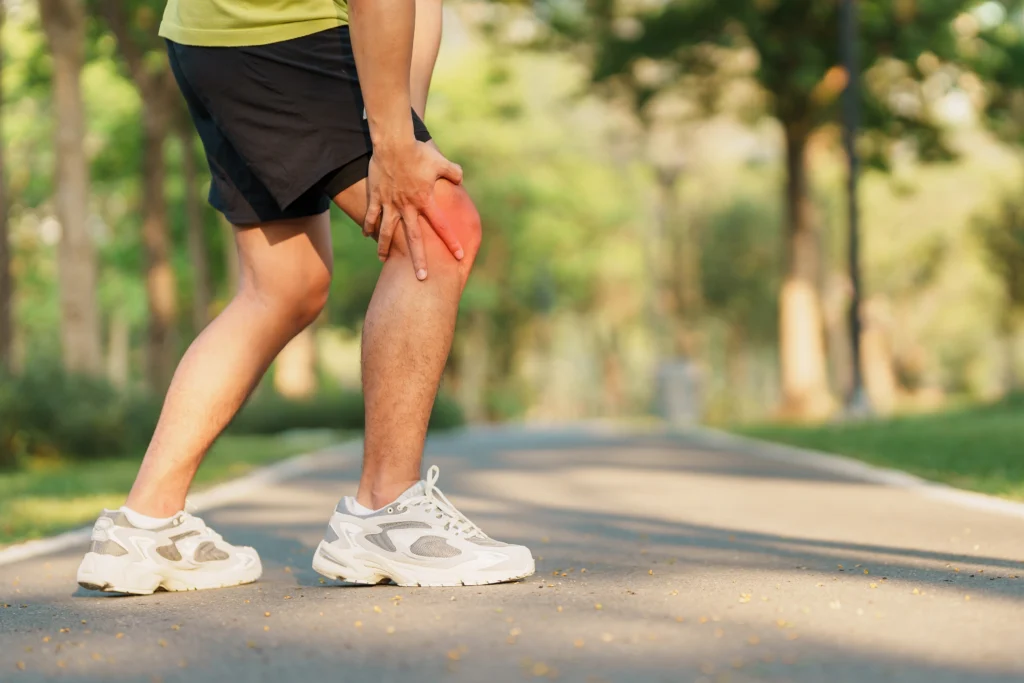
Kneecap pain, also referred to as patellofemoral pain, is a common complaint. It affects individuals across all age groups and activity levels. The kneecap, or patella, is a small, shield-shaped bone that sits in a groove at the end of the thigh bone (femur). It plays a key role in knee function, primarily by increasing the leverage of the quadriceps muscle. When this system malfunctions, the resulting pain can be sharp, dull, or aching, making simple activities like climbing stairs or standing up a challenge.
Understanding the root causes of this pain is the first step toward effective management. In this post, we’ll explore the various traits of kneecap pain, its common causes, the spectrum of available treatments, and, most importantly, how to deal with kneecap pain.
Key Takeaways
- Many kneecap pain cases respond well to non-surgical treatments. These may include rest, ice, over-the-counter pain relievers, and a structured physical therapy program.
- Physical therapy is frequently a cornerstone of recovery. It focuses on strengthening the muscles that support the knee, particularly the quadriceps, hip abductors, and core stabilizers.
- Learning to adjust your activities and training load supports long-term relief, including avoiding activities that provoke pain until your knee has stabilized and strengthened.
- For patients whose pain is severe and unresponsive to months of conservative care, surgical interventions may be considered to correct underlying structural issues.
Understanding the Anatomy of Kneecap Pain
To fully understand how to deal with kneecap pain, it’s helpful to first know the biomechanics of the knee joint. The patella glides up and down the femoral groove as the knee bends and straightens. This movement is called patellar tracking. The patella is held in place by a network of soft tissues, including the quadriceps tendon above and the patellar tendon below. The vastus medialis obliquus (VMO), a part of the quadriceps muscle, is particularly important for pulling the kneecap inward to keep it centered.
When any part of this system is out of balance, whether due to muscle weakness, tightness, or structural abnormality, the patella can track improperly. This improper tracking causes friction and irritation on the cartilage beneath the kneecap. Pain typically worsens with activities that load the knee joint, such as running, squatting, or descending stairs.
Common Causes of Kneecap Pain
In the following subsections, we’ll review some of the common causes of kneecap pain.
Patellofemoral Pain Syndrome (PFPS)
PFPS is a frequent diagnosis for knee pain. It is often called “runner’s knee” because it is common in athletes who engage in repetitive knee-bending activities.
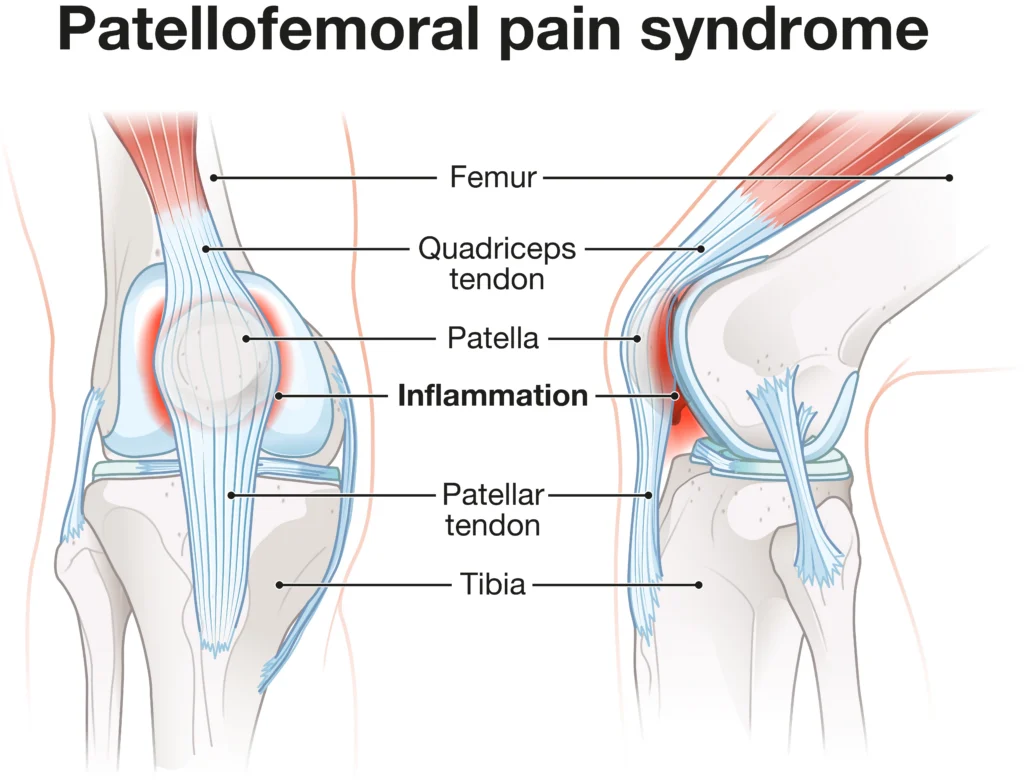
A sudden increase in the intensity, duration, or frequency of physical activity is a primary contributor. Additionally, weak hip abductors and external rotators can cause the thigh bone to rotate inward. This rotation changes the angle at which the kneecap tracks, leading to increased pressure on the joint. Problems with foot mechanics, such as excessive pronation (flat feet), can also lead to poor patellar tracking.
Patellar Tendinitis (Jumper’s Knee)
Jumper’s knee involves inflammation or degeneration of the patellar tendon, the cord-like structure connecting the kneecap to the shinbone. It is particularly prevalent in sports that involve frequent jumping, such as basketball and volleyball. The constant, explosive loading and unloading of the tendon during jumping and landing can create micro-tears. Muscle tightness also may increase the tension on the patellar tendon, making it more susceptible to injury.
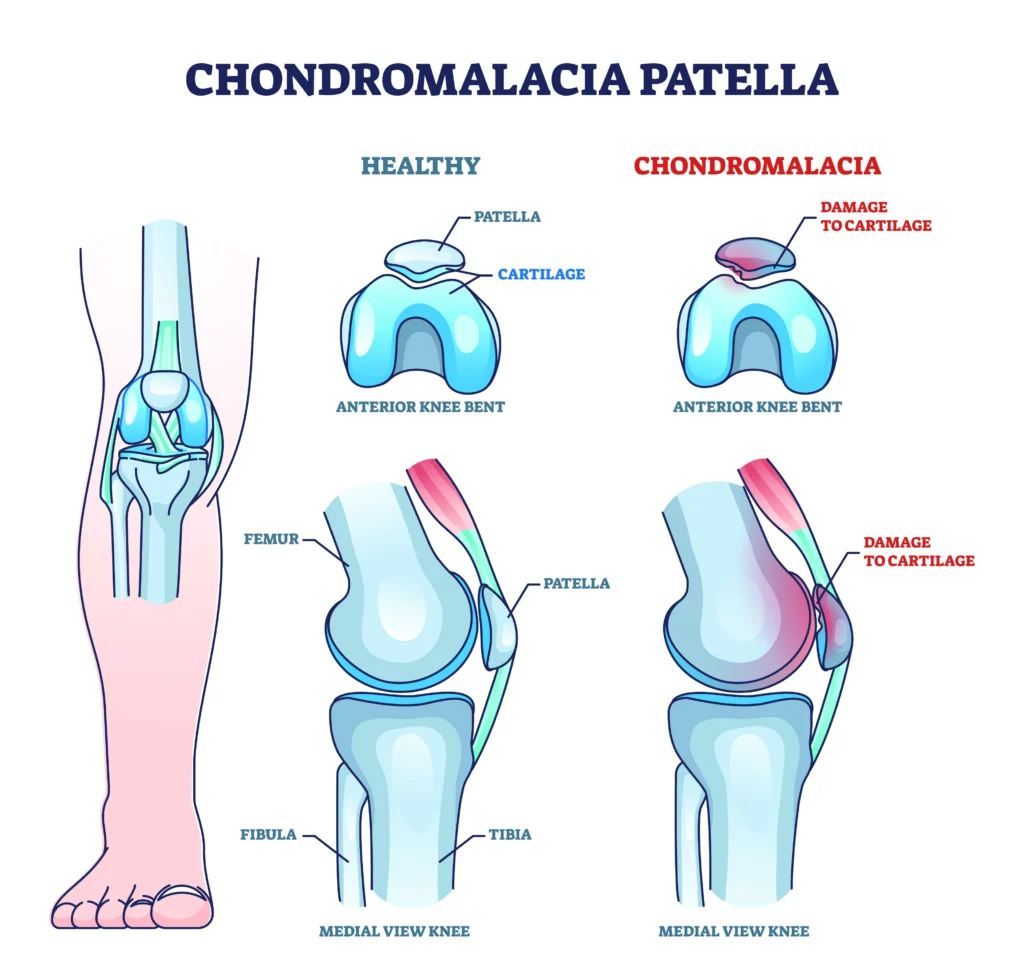
Chondromalacia Patellae
Chondromalacia patellae refers to the softening and breakdown of the articular cartilage on the underside of the kneecap. While it can be a source of pain, it is often a finding associated with PFPS rather than a standalone diagnosis. Long-term, abnormal patellar tracking causes the cartilage to wear down prematurely. A direct blow or injury to the kneecap can also damage the cartilage surface.
Patellar Instability and Dislocation
Patellar instability occurs when the kneecap partially (subluxation) or fully (dislocation) slips out of its groove. This is often a traumatic event, but some individuals have a predisposition due to shallow femoral grooves or ligamentous laxity. A sudden twist or direct impact can force the kneecap out of place. Additionally, a naturally high-riding kneecap (patella alta) or a shallow trochlear groove can make the joint inherently less stable.
Osteoarthritis
In older adults, kneecap pain may be a symptom of patellofemoral osteoarthritis. This is a degenerative condition where the protective cartilage wears away over time, leading to bone-on-bone friction.
The Diagnostic Process: Pinpointing the Problem
An accurate diagnosis is a starting point for determining how to deal with kneecap pain. An experienced knee specialist can conduct a thorough evaluation, which typically includes a detailed patient history, a physical examination, and, if necessary, imaging studies.
Your doctor will ask about the nature of the pain, including when it started, what activities make it worse, and what provides relief. During the physical exam, the doctor will assess alignment, range of motion, muscle strength, tenderness, and patellar tracking.
In some cases, imaging may be used to rule out other causes and assess the extent of any structural damage. Standard X-rays can show the alignment of the patella and femur. They are also used to check for signs of arthritis or fractures. Magnetic resonance imaging (MRI) may be used to obtain detailed images of soft tissues.
Conservative Treatment: The First Line of Defense
Conservative treatment focuses on reducing pain and inflammation, restoring normal biomechanics, and gradually returning to activity.
Pain and Inflammation Management
The following strategies may be recommended to help reduce pain and inflammation:
- Rest and Activity Modification: This does not typically mean complete immobilization. It means temporarily avoiding activities that trigger the pain. Substituting high-impact activities with low-impact options like swimming or cycling may maintain fitness without stressing the knee.
- Ice Therapy: Applying ice to the painful area for 15 to 20 minutes several times a day may help reduce inflammation and numb the pain.
- Nonsteroidal Anti-Inflammatory Drugs (NSAIDs): Over-the-counter medications may provide short-term relief from pain and swelling.
- Taping and Bracing: In some cases, specialized taping techniques may be used to temporarily improve the kneecap’s alignment.
Physical Therapy and Rehabilitation
Oftentimes, physical therapy is an important component of recovery. A tailored program may help address the underlying muscle imbalances and tracking issues. One focus is on strengthening the muscles that control the knee and hip. Stronger supporting muscles can reduce the load on the patellofemoral joint. Additionally, physical therapy aims to improve flexibility, as tight muscles can pull the kneecap out of alignment.
Gradual Return to Activity
Once pain has subsided and strength has improved, the patient may begin a gradual return to their previous activities. The intensity and duration of activity should be increased slowly to allow the body to adapt. It’s important to listen to your body. Any return of sharp or persistent pain may be a signal to rest and ease up on activity. Wearing supportive footwear that’s appropriate for your specific activity also plays a role in preventing re-injury and ensuring a safe return to movement.
Advanced and Interventional Treatments
While conservative care can be successful for many, a subset of patients may require more advanced interventions.
Injections
For some conditions, corticosteroid injections may be administered into the joint or around the tendon to provide significant, though often short-lived, pain relief.
Platelet-rich plasma (PRP) injections involve using a concentration of the patient’s own platelets, which are injected into the injured area. The growth factors within these platelets may help promote healing.
Surgical Options for Chronic Kneecap Pain
Surgery is generally considered when structural issues cannot be corrected through non-surgical treatments. The specific approach, such as patellar realignment, cartilage restoration, or joint replacement surgery, depends on the underlying cause and severity of the problem.
Patellar Realignment Procedures
When chronic pain or instability is caused by improper kneecap tracking, surgical realignment may be performed to improve stability and alignment. This may involve releasing tight tissues on the outer side of the kneecap, tightening or reconstructing structures on the inner side, or adjusting the attachment point of the tendon below the kneecap to improve its movement pattern.
Cartilage Restoration Procedures
If the cartilage under the kneecap is damaged, procedures to smooth, repair, or replace the cartilage may be recommended. Depending on the extent of the damage, this might include minimally invasive techniques like arthroscopy to remove rough cartilage.
Prevention: Strategies for Long-Term Knee Health
A proactive approach to knee health focuses on maintaining strength, flexibility, and proper form during activity. While some knee conditions cannot be prevented, certain strategies can help support knee health.
Targeted Exercise
- Prioritize Hip and Core Strength: Strong glutes and a stable core help with maintaining proper lower limb alignment during walking, running, and jumping.
- Regular Stretching: Incorporate a routine that stretches the quadriceps, hamstrings, and calf muscles. Flexibility helps ensure that no single muscle group is placing undue tension on the kneecap.
Optimize Training and Activity
- Gradual Progression: Follow the 10% rule: aim to not increase your weekly mileage, weight lifted, or duration of activity by more than 10%. This allows your body’s tissues time to adapt.
- Proper Technique: Seek professional guidance to ensure correct form for activities like running, squatting, and lifting. Poor technique is a common cause of overuse injuries.
- Listen to Pain Signals: Differentiate between muscle fatigue and joint pain. If an activity causes sharp or persistent pain, stop and assess the situation.
Equipment and Footwear
- Replace Worn Shoes: Running shoes lose their cushioning and support over time. Replace them regularly to ensure proper shock absorption.
- Consider Orthotics: If you have known foot mechanics issues, custom or over-the-counter orthotics can help correct alignment and reduce stress on the knee.
Summary
Kneecap pain, or patellofemoral pain, can affect people of all ages and activity levels. It often develops gradually due to factors like muscle imbalances, overuse, or structural alignment issues. Many cases respond well to conservative treatments such as activity modification, physical therapy, and anti-inflammatory strategies. In more persistent or severe cases, advanced interventions may be appropriate. A thorough evaluation by a medical professional is helpful for determining the underlying cause and guiding treatment. With a proactive approach, many individuals may manage their symptoms and support long-term knee health.
Frequently Asked Questions
Will I need surgery for my kneecap pain?
Most cases of kneecap pain respond well to conservative, non-surgical treatment. This may include rest, activity modification, and a comprehensive physical therapy program. Surgery is typically reserved for severe cases that involve structural issues.
Are squats and lunges bad for kneecap pain?
During the acute, painful phase, squats and lunges should generally be avoided or modified. These exercises can place high compressive forces on the patellofemoral joint, which may aggravate the pain. However, as part of a structured physical therapy program, modified squats (like mini-squats or leg presses with limited depth) may be recommended to strengthen the quadriceps. The key is to perform them pain-free and with proper form, under the guidance of a professional.
When should I see an orthopedic specialist?
Consider seeking professional evaluation if your kneecap pain is severe or prevents you from performing daily activities, does not improve after a week or two of rest, ice, and over-the-counter pain relievers, is accompanied by swelling, redness, or a fever, or involves a sensation of the knee “giving way,” “locking,” or the kneecap visibly slipping out of place.